Here’s the secret women over 50 in Japan use to soothe their eczema for good. And most women in America have never even heard of it.
For women whose hands crack and every cream burns going on, even the ones with eczema written on the tube. These are the 5 things my 82-year-old grandmother outside Osaka taught me, in the order I learned them.

The short version, if you only have a minute
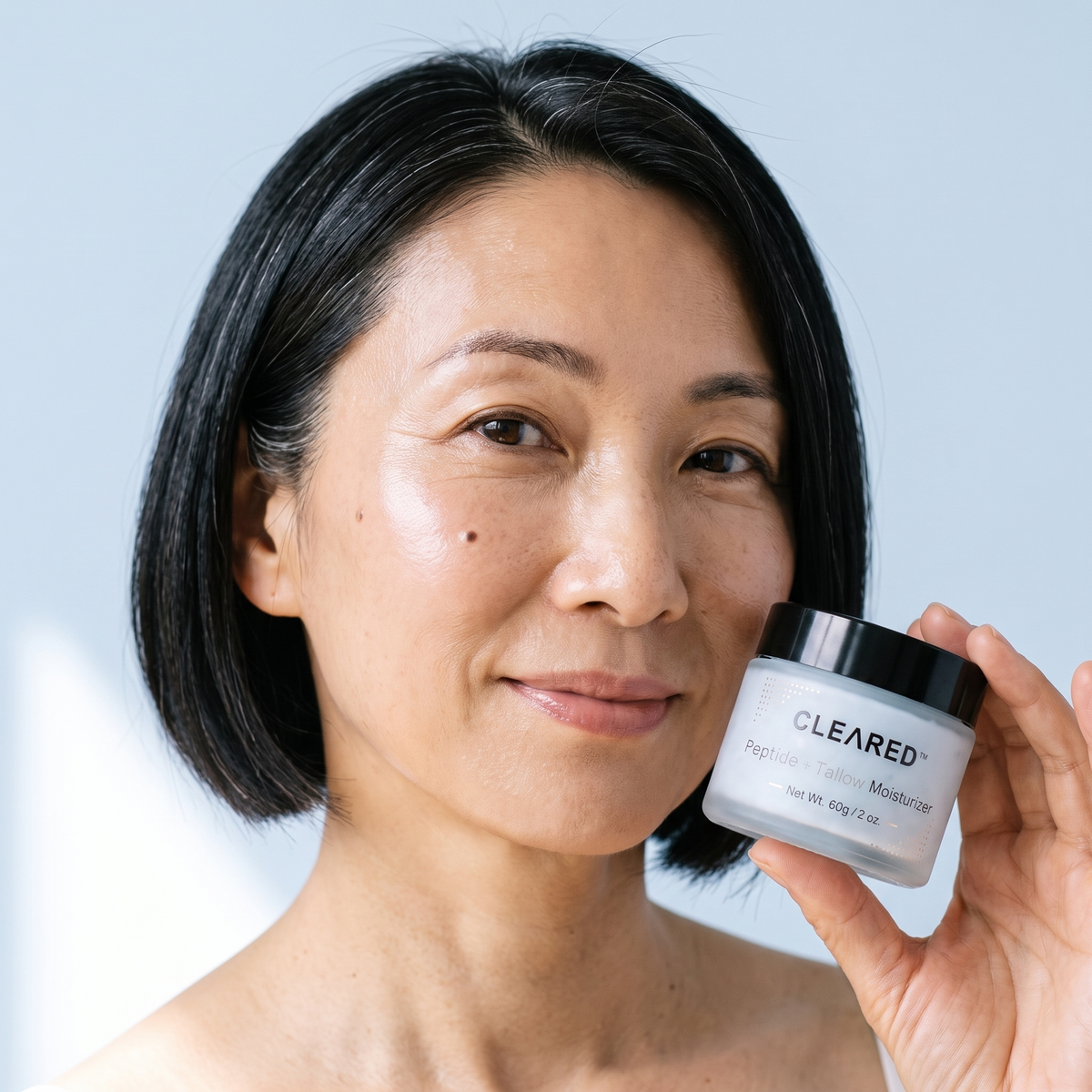
The balm my grandmother uses is beef tallow. It’s the closest fat there is to the fat our skin stops making after menopause, so it goes into a crack instead of sitting on top of it and burning.
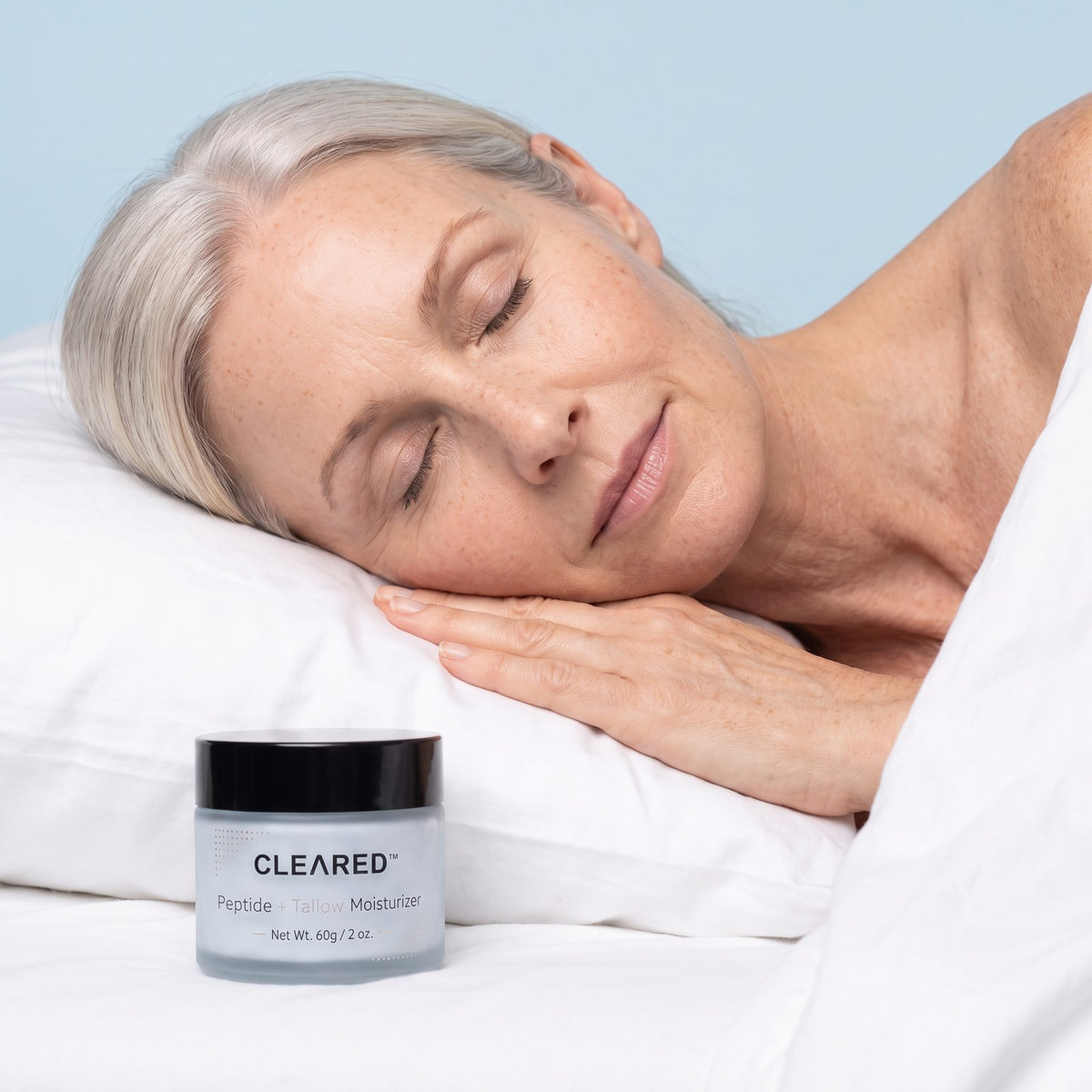
The one I use here in America is called CLEARED. It’s whipped beef tallow with manuka honey, jojoba and GHK copper (the skin uses it to repair itself), and there’s no water in it, so it didn’t sting even on my open cracks. You get 90 days to try it, with every penny back if it doesn’t help.
Check if it’s still in stock →I know this is a long list. I wrote it long on purpose, because 15 years ago I would have given anything for somebody to sit me down and tell me all of this, so if any of it sounds familiar, please stay with me until the end.
I got eczema when I was 32. It started on my knuckles and the backs of my hands, and it got much worse after menopause. For 15 years I did what everybody here does. I bought every cream Amazon would sell me (Eucerin, Aveeno, CeraVe, Cortizone 10, the big tubs and the little tubes), and when those stopped working I came home from the doctor with the steroid tube. I tried to add it all up once and stopped when I got past a couple thousand dollars.
By 48 my skin had gone thin and my hands had started to crack, and every cream burned going on. I would sit on the edge of the bed for 20 minutes with my hands shaking until the stinging stopped, and I honestly thought that was just what eczema was, up until the night my daughter watched me and said, “Mom, that’s not normal. Nobody should have to sit there shaking after putting lotion on.”
So the next time I went home to Osaka, I asked my grandmother why she had never once reached for a Western cream. This is what she told me.
In Japan, skin that cracks and burns has a name
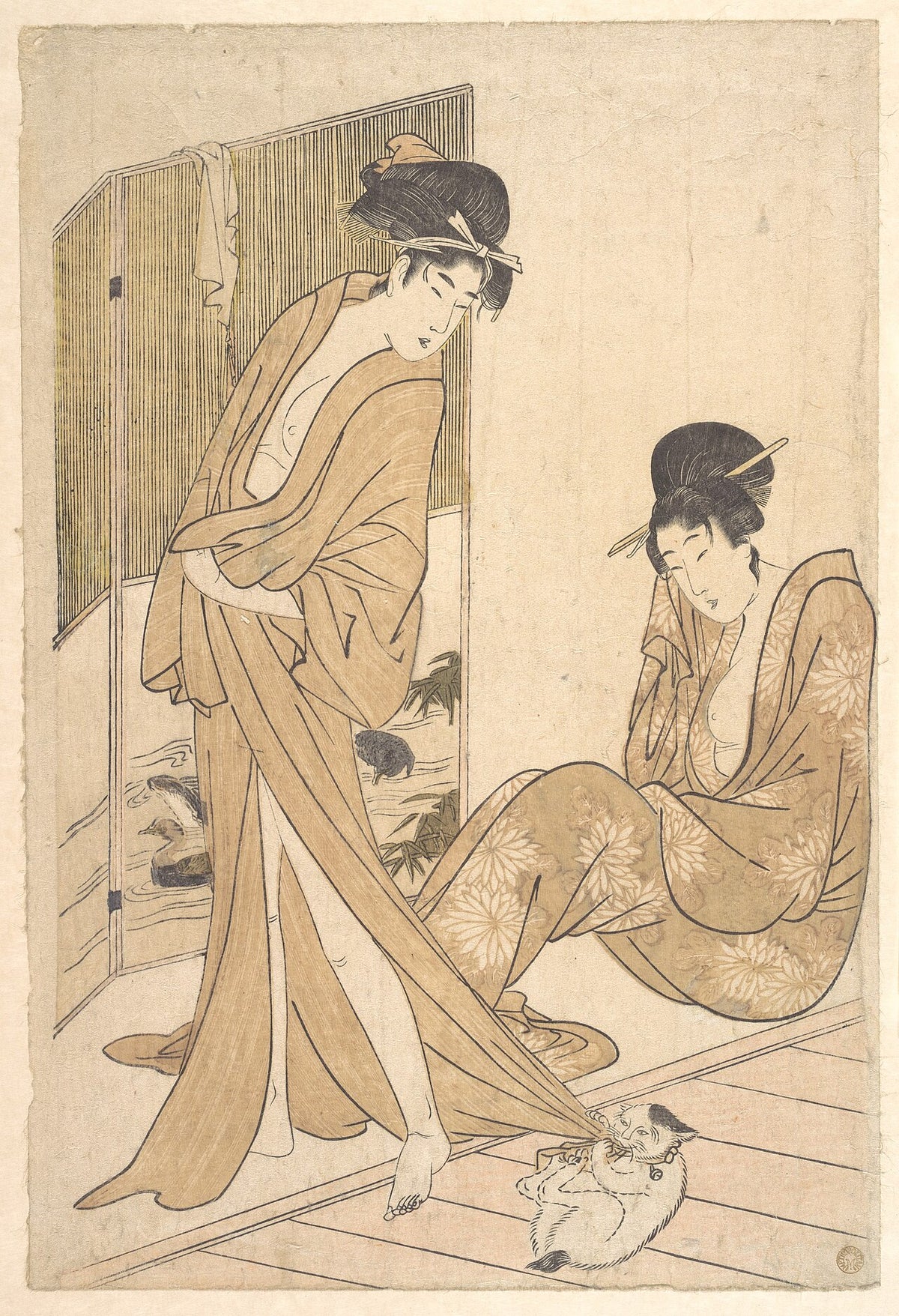
They call it akagire, the deep cracks that split across the knuckles and down the sides of the fingers and burn when anything touches them. The women there named it centuries ago, and they worked out how to soothe it.
My grandmother still lives on a small farm outside Osaka, and she is 82, and her hands have never once cracked. Every night of her life she has rubbed the same beef tallow balm into her hands and her face. When I was little I used to sit and watch her do it and think, why is Grandma rubbing fat on her face? I thought it was just an old country habit, and when I moved to America I forgot all about it.
After menopause, the skin stops making the fat that holds it together
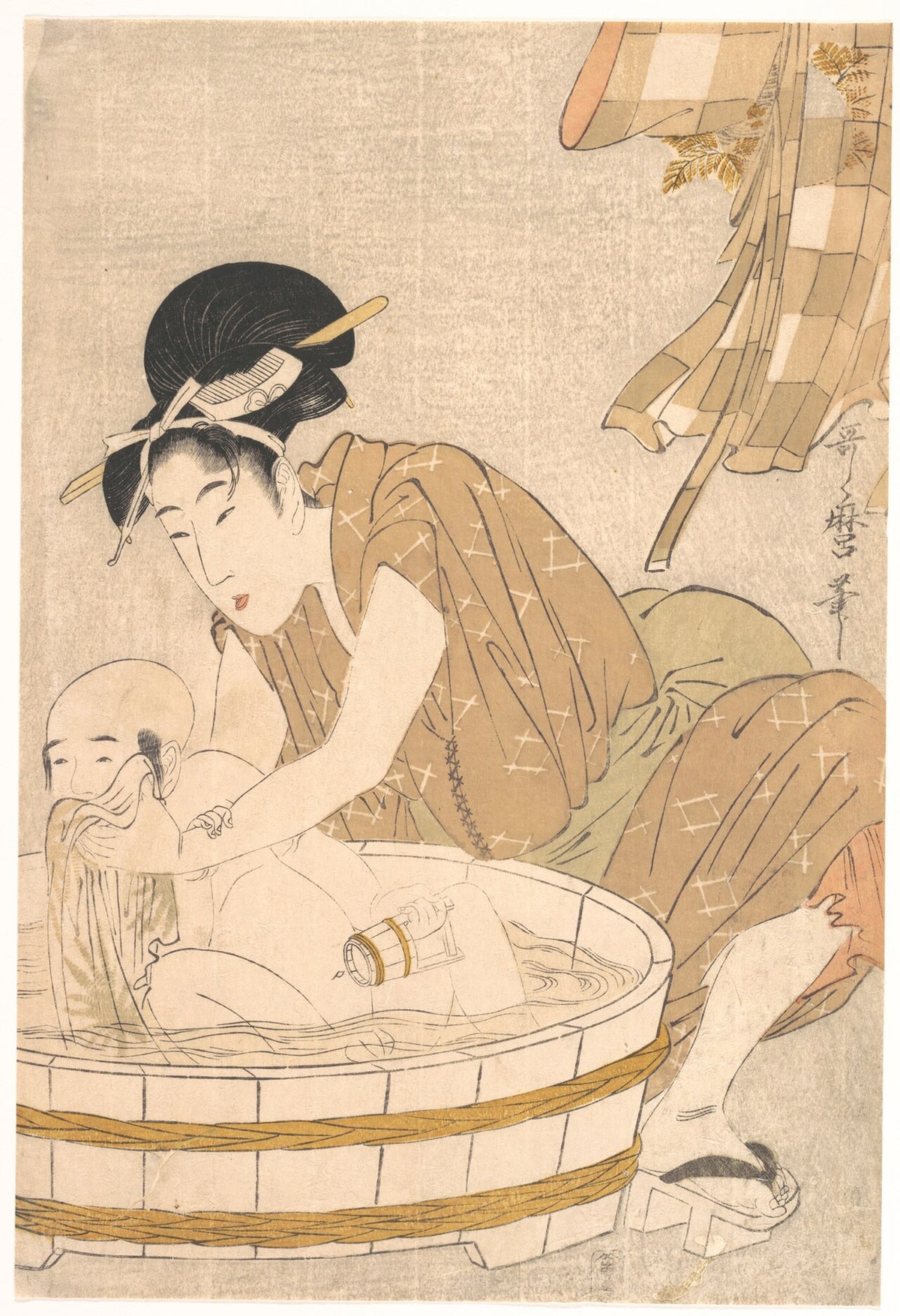
She took my hand at her kitchen table and turned it over. She said that after menopause the skin stops making the fat that holds the surface together, so it dries out and splits. (The doctors here call that a fissure, and every woman with eczema knows that sharp burn when anything touches one.)
Then she said the part that made me put my tea down. “You put it on at bedtime, you’re awake at 2 in the morning putting it on again, and the crack gets deeper every night.” That was my life, every single night, and I had never told her any of it.
It was never my skin that burned. It was what was in the tube.
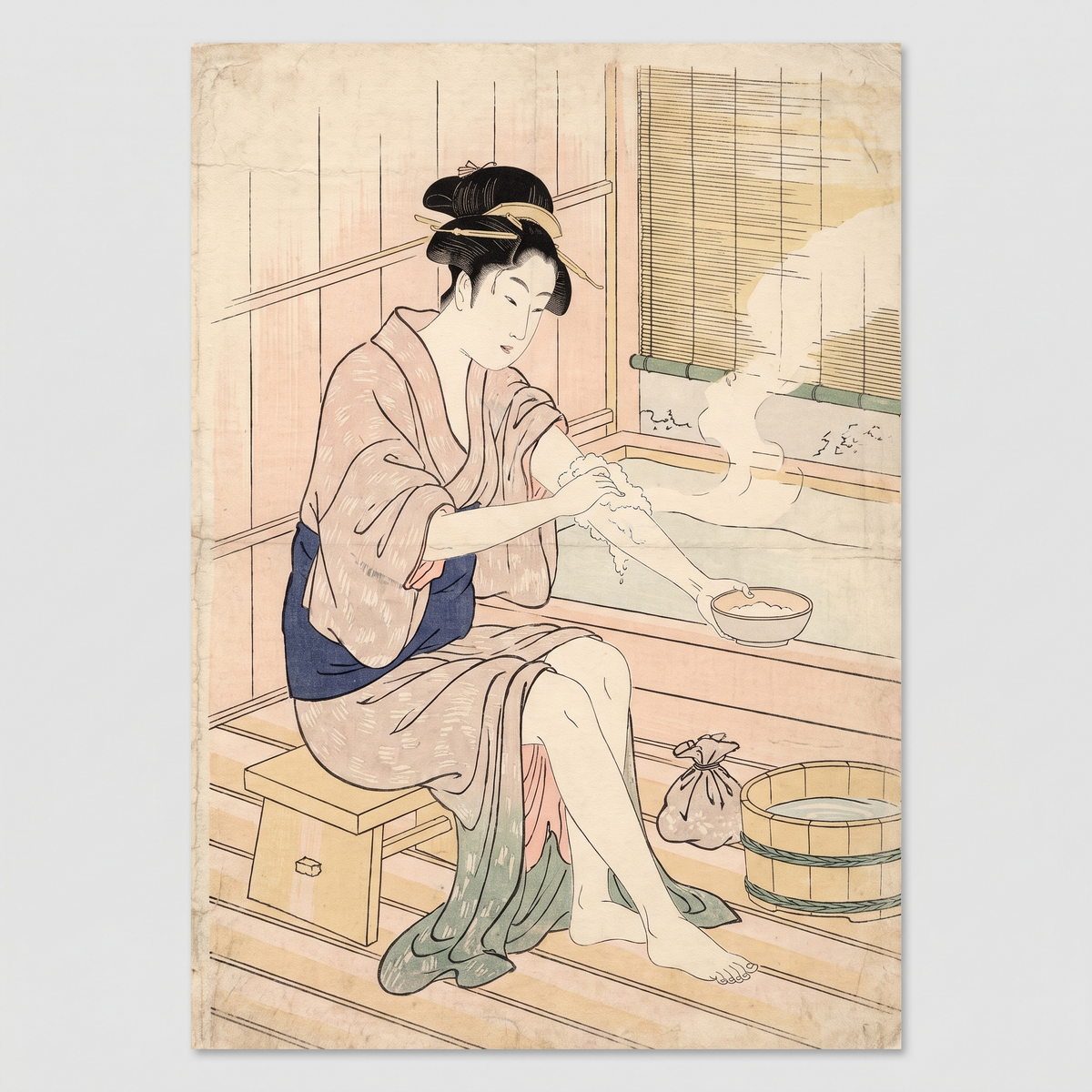
My grandmother said a crack like that is an open nerve. A regular cream is made to sit on top of the skin, so on an open crack it sits right on the nerve, and that’s why it burns. Even plain Vaseline stung me by the end, which I didn’t think was possible.
On the plane home I read the backs of all my tubes. The first thing on almost every one of them was water, and the Cortizone has alcohol in it, and anybody who has put rubbing alcohol on a cut knows what that does to open skin. A fat has no water and no alcohol in it, which is why my grandmother’s balm never burned her.
She told me two more things the Japanese way does differently. Wash in warm water, never hot (hot water feels good on itchy skin for a minute and then it’s worse), and put the balm on right after the bath while the skin is still a little damp, all over, not just on the bad spots.
What I was doing: scalding showers, a hard rub with the towel, then a cream that was mostly water, and 20 minutes of stinging.
The steroid tube works at first. That’s the trap.
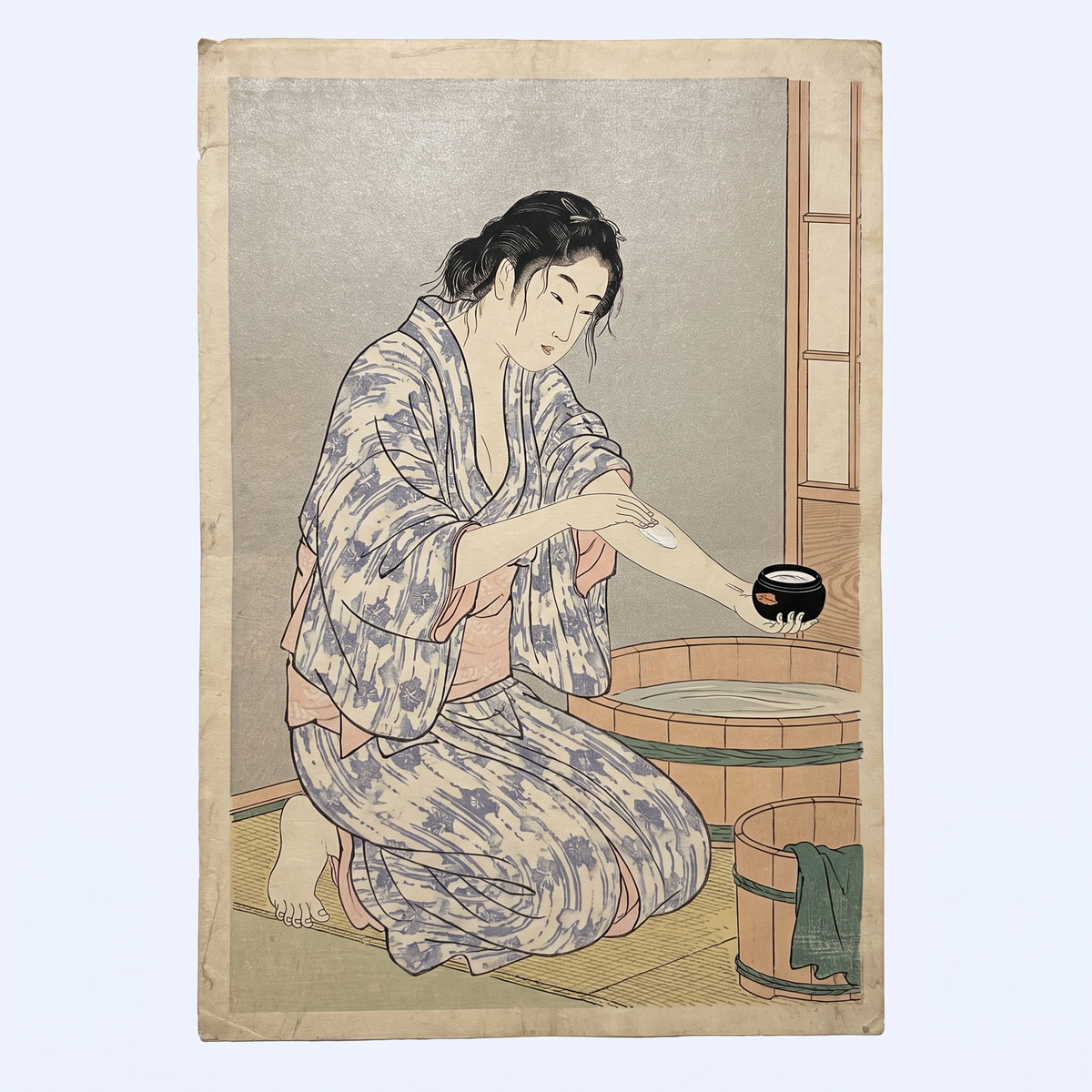
I want to be fair to the steroid tube, because it does work. It stopped my itch by the next morning every time, which is exactly why I kept going back to it.
But it also thins the skin. Mine went shiny and thin like tissue paper, so the crack came back sooner and deeper, and every time I stopped it came back worse, and the answer at the doctor was always a stronger tube. A hand that keeps cracking is a prescription that keeps getting refilled.
I don’t blame my doctor. She was doing what she was taught, and a balm from a farm outside Osaka was never going to come up in a 10-minute appointment. But the day I understood all this, I stopped feeling stupid and I got angry about the 15 years I’d lost.
Japanese women reach for fat, not lotion. But not just any fat.
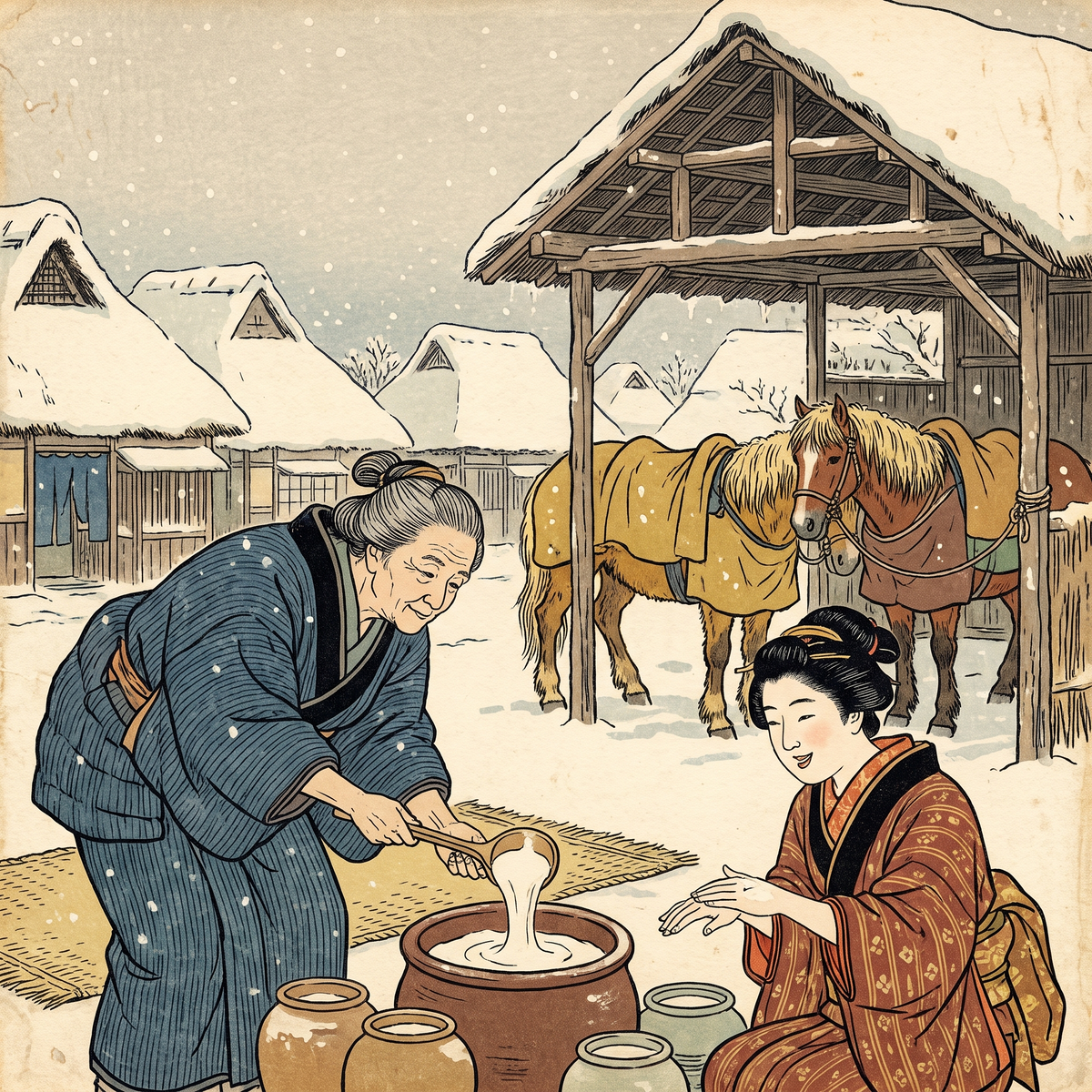
Beef tallow has been used on Japanese farms for generations for dry, cracked skin (walk into a drugstore there and you’ll find shelves of animal-fat creams). It’s the closest fat there is to the fat our own skin makes, so the skin takes it in instead of leaving it sitting on the crack.
I couldn’t bring my grandmother’s balm home (they make it on the farm and nobody sells it), so I ordered the cheapest tallow I could find online. It smelled like cooking beef. It had gone hard and grainy, so I had to dig it out with my fingernail, and it sat on my hands in a greasy film that ended up on my pillowcase. One woman in the reviews said it was like slathering her face with bacon grease, and another said it brought ants into her bed.
I nearly quit right there. I called my grandmother and told her maybe tallow only worked in Japan, and she told me what to look for instead. The fat first on the label, no water at all, and honey, because hers has honey in it. I added my own list after that first jar: whipped so it never goes hard, smelling of anything but beef, and a real-size jar.
The one my grandmother picked
“That’s the one.”
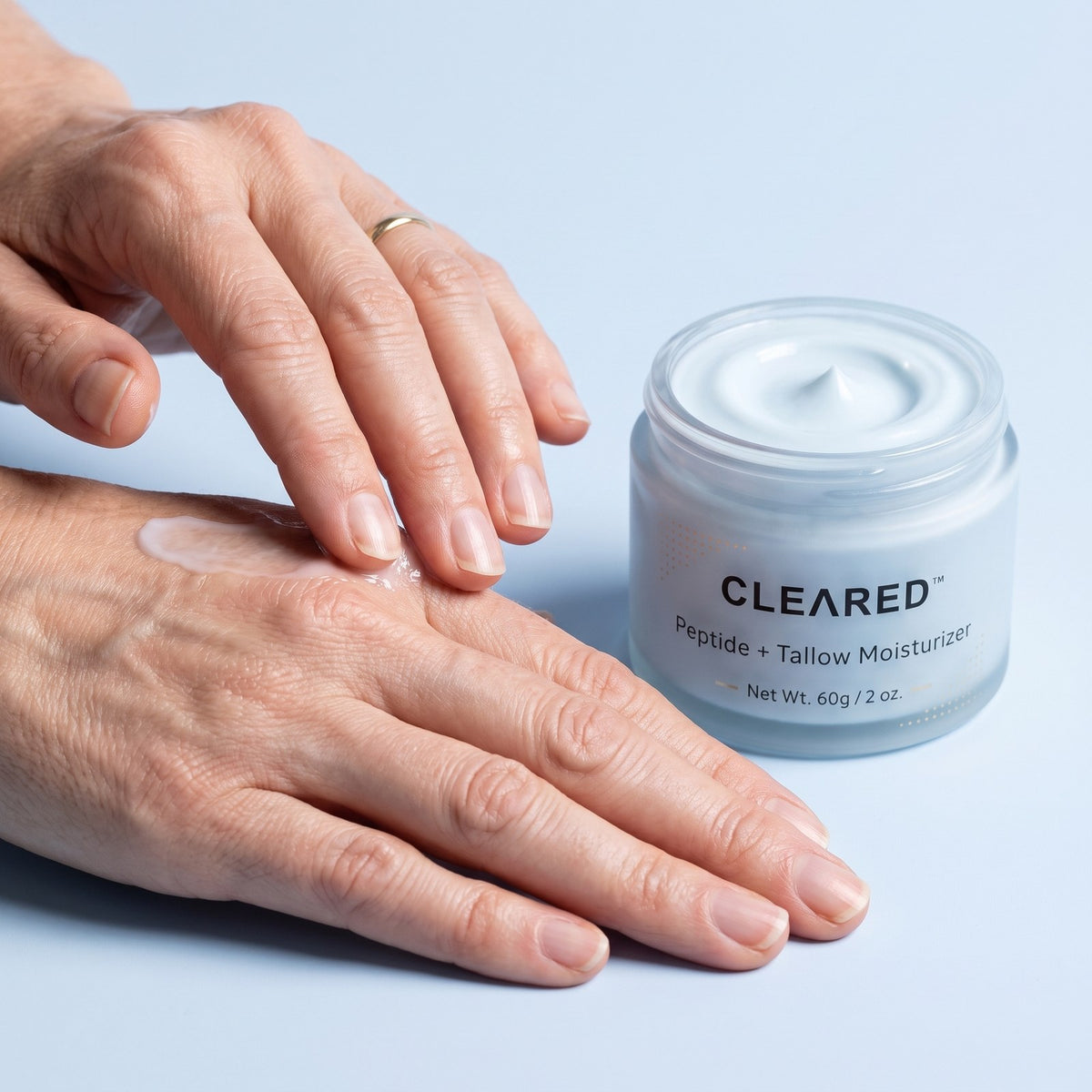
It took me a few weeks of reading labels, and the one that matched was called CLEARED. I read the label to my grandmother on a video call, and when I got to the end she said, “That’s the one.”
- Whipped Beef Tallow, first on the label. Whipped so it stays soft and never goes hard in the jar.
- No water in it at all, so there’s nothing in it to burn open skin. It didn’t sting even on my open cracks.
- GHK copper, which the skin uses to repair itself, carried in with the tallow.
- Manuka honey and jojoba, plus vitamin E, and methylene blue, which is what makes the balm pale ice blue.
- Smells a little like lemon, nothing like beef.
- A real 60-gram jar. Half a pea does both of my hands, and one jar lasts me about a month. If it ever feels greasy, I used too much.
How I use it the Japanese way
- Warm water, not hot, and soap only where I really need it.
- Wash with my hands, pat dry and leave the skin a little damp.
- Half a pea of balm, warmed between my fingertips and pressed in right away. Don’t rub.
- Again before bed, on my hands and anywhere else that gets dry.
The first night
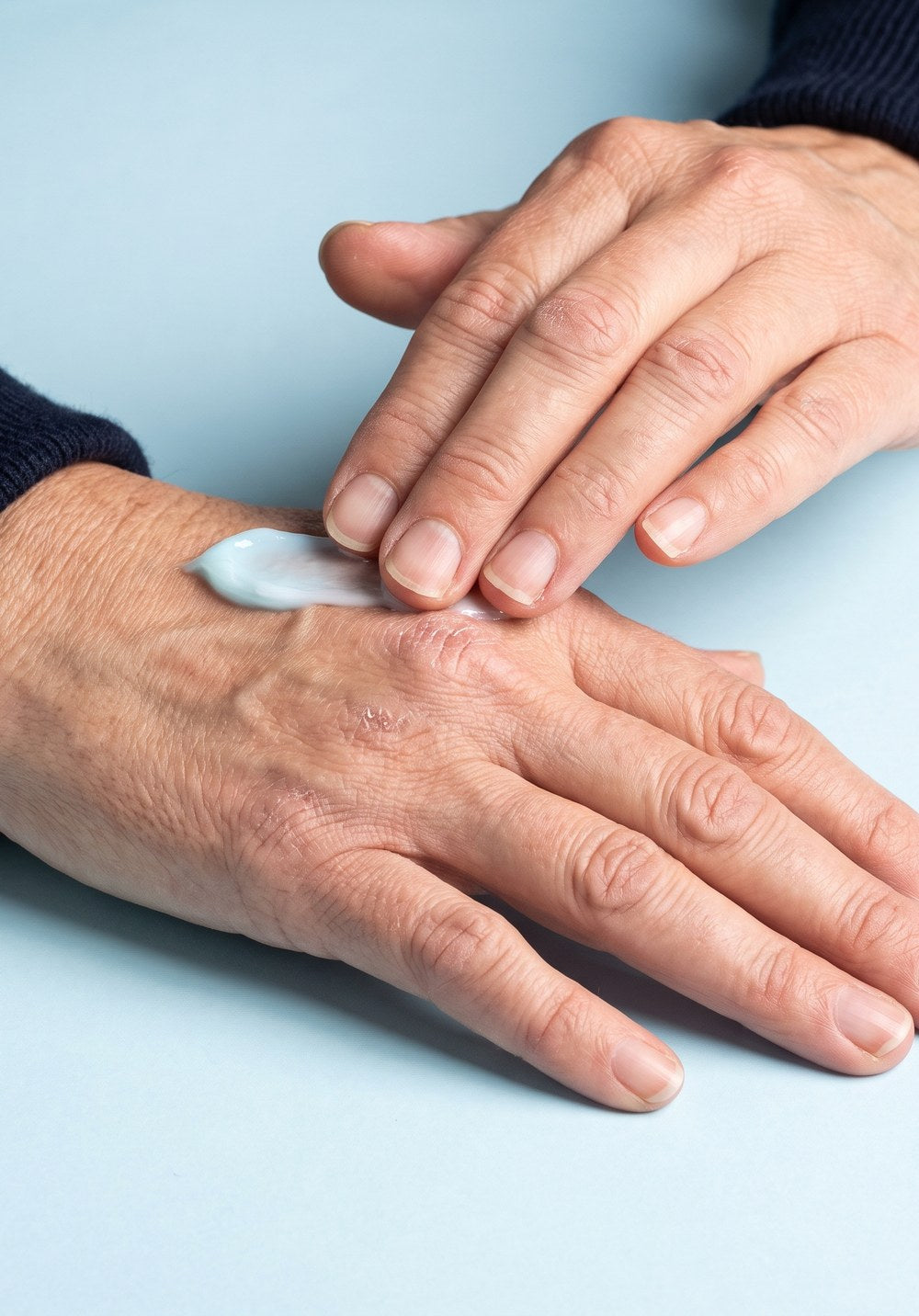
I was so nervous that first night, because putting anything on is the hardest part. You never know if it’s going to sting. I took about half a pea on my fingertip and tried a tiny patch on one knuckle first, just in case.
It didn’t sting. It felt like putting an ice pack on it! The pale blue disappeared into my skin while I watched, and in about a minute my knuckle just looked like skin again with nothing sitting on top. So I did the rest of both hands, turned off the lamp, and slept through the whole night for the first time in longer than I can remember.
In the morning I checked my pillowcase, which is white, and there wasn’t a mark on it.
What happened, week by week
- The first night. No sting, and I slept through.
- The first week. The nights got a little quieter every night. Around the fifth night it woke me at 2 a.m. and I nearly reached for the steroid tube in the drawer, but I put a little more balm on instead, and because it didn’t burn I was back asleep in a few minutes.
- About 10 nights in. The cracks on my knuckles had closed, and I kept turning my hands over to look at them.
- Two weeks. I did the dishes without gloves for the first time in years.
- About a month. My hands looked like my hands again, soft and smooth, and I started wearing my rings again. My daughter grabbed my hand at dinner and said, “Mom, your hands are soft.”
That was two years ago, and my hands haven’t cracked since. I’ll be honest about what didn’t change, though. My knuckles are still a little darker than the rest of my hand, and every January I still get one dry patch on my right thumb, but now it just gets dry and the balm takes care of it.
What other CLEARED customers sent us
Their own photos, no filters or retouching. 10,000+ people have ordered CLEARED. Individual results vary.
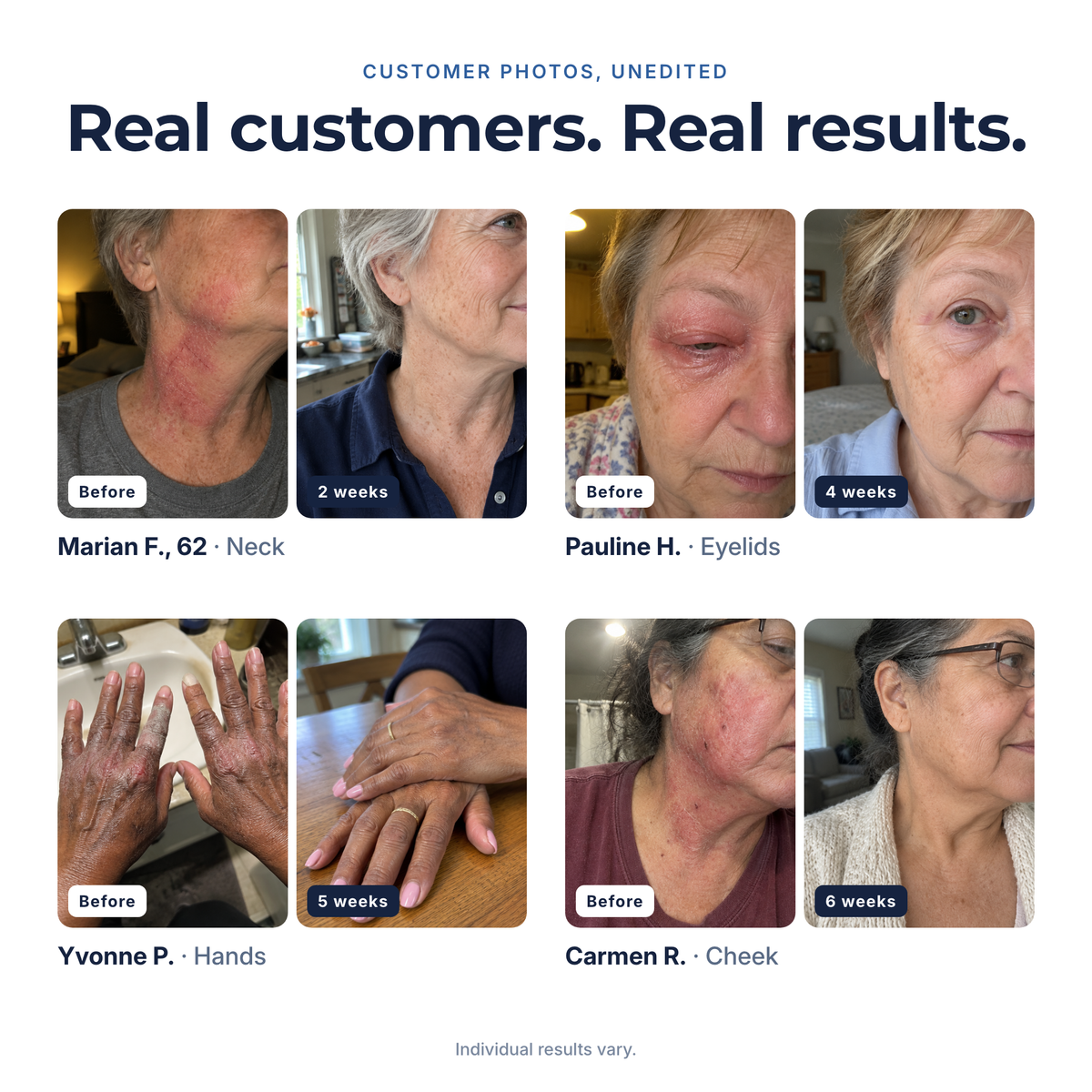
“My knuckles have closed up and I got my nails done last week for the first time since 2019 lol”
Yvonne P. · Hands, 5 weeksWho this is not for
- If you don’t want anything made from animal fat on your skin, this isn’t for you, because the beef tallow is the whole point.
- If you’re hoping for an overnight change, please know it took my cracks about 10 nights to close and about a month before my hands felt soft, so give it the time.
- And if the cream you use now goes on without burning, keep using it. I wrote this for the women who sit on the edge of the bed waiting for the sting to stop.

CLEARED Tallow Balm
★★★★★ 10,000+ people have ordered
Claim 50% off →90-day money-back guarantee, even if you’ve used the whole jar
— Tsukiko
P.S. My grandmother still keeps her balm in an old jar on the windowsill by her sink, and at 82 she has still never had a cracked hand. I think about that jar every time I open mine.
P.S. Please don’t buy the cheap tallow online first like I did. I lost two weeks and a good pillowcase finding out.
Questions
Will it sting on cracked skin?
It didn’t sting on mine, even on open cracks. There’s no water and no alcohol in it. Try a tiny patch on one knuckle first, like I did.
Will it be greasy or end up on my sheets?
It’s whipped and it goes in. Half a pea does both hands, and my white pillowcase had no mark on it in the morning. If it ever feels greasy, you used too much.
Beef fat? Won’t it smell?
It smells a little like lemon and nothing like beef, and it’s whipped, so it never goes hard in the jar.
Is this a treatment for eczema?
No. CLEARED is a moisturizer, so it won’t make eczema go away. Keep using anything your doctor prescribed, and talk to them before you change or stop a treatment.
What if it doesn’t work for me?
You have 90 days. Send one email and they refund every penny, even if you’ve used the whole jar, and they pay the return postage.